
 Todos tus libros
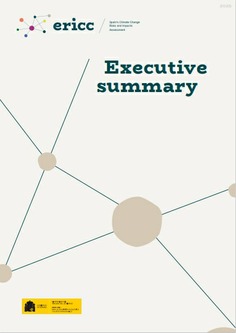
 Spain's Climate Change Risks and Impacts Assessment (ERICC-2025). Summary for Policymakers
Oficina Española de Cambio Climático
- Órgano proponente
- Oficina Española de Cambio Climático
- Colección
- Folleto
- Materia
- Cambio climático
- Idioma
- Castellano
- Editorial
- Ministerio para la Transición Ecológica y el Reto Demográfico
- EAN
- 9789252665250
- Edición
- 0
- Fecha publicación
- 06-03-2026
Contenidos
Spain's Climate Change Risks and Impacts Assessment (ERICC-2025) presents the first nationwide evaluation of climate-related threats across 14 key sectors. The report highlights the increasing frequency and intensity of extreme events such as heatwaves, droughts, floods and wildfires, many of which already exceed historical records. It identifies 141 relevant risks, 51 of which are classified as key and often interconnected, revealing strong cascading effects across ecosystems, infrastructure and socioeconomic systems. Water resources, natural heritage and forestry emerge as major drivers of systemic risk. The report stresses that most key risks require immediate or near-term action, particularly in health, water, biodiversity, urban environments and security. Many impacts show low or no reversibility, including biodiversity loss, coastal land loss and ecosystem degradation. Despite some knowledge gaps, current evidence is sufficient to guide urgent adaptation policies for the 20262030 planning cycle.
Libros relacionados
Octava Comunicación Nacional de España. Convención Marco de las Naciones Unidas sobre el Cambio Climático
Régimen de Comercio de Derechos de Emisión de la UE
Libro Blanco de la Ciencia del Clima en España
Informe CLIVAR-SPAIN sobre el Clima en España
Mitigación del Cambio Climático
Resumen para Responsables de Políticas (ERICC-2025)
The CLIVAR-SPAIN Report on the Climate Change in Spain
Empleo y Transición Ecológica. Guía para Agentes de Formación
Huella de Carbono del Ministerio para la Transición Ecológica y el Reto Demográfico 2023
Evaluación de Riesgos e Impactos derivados del Cambio Climático en España. Informe